
Guide to Visiting Portaria, the Gateway to Pelion
If you are visiting Volos or the Sporades Islands, you might consider adding another destination to your itinerary. Mount Pelion, located on a peninsula of the same name, is one of Greece’s most beautiful mountains and is well worth a visit.
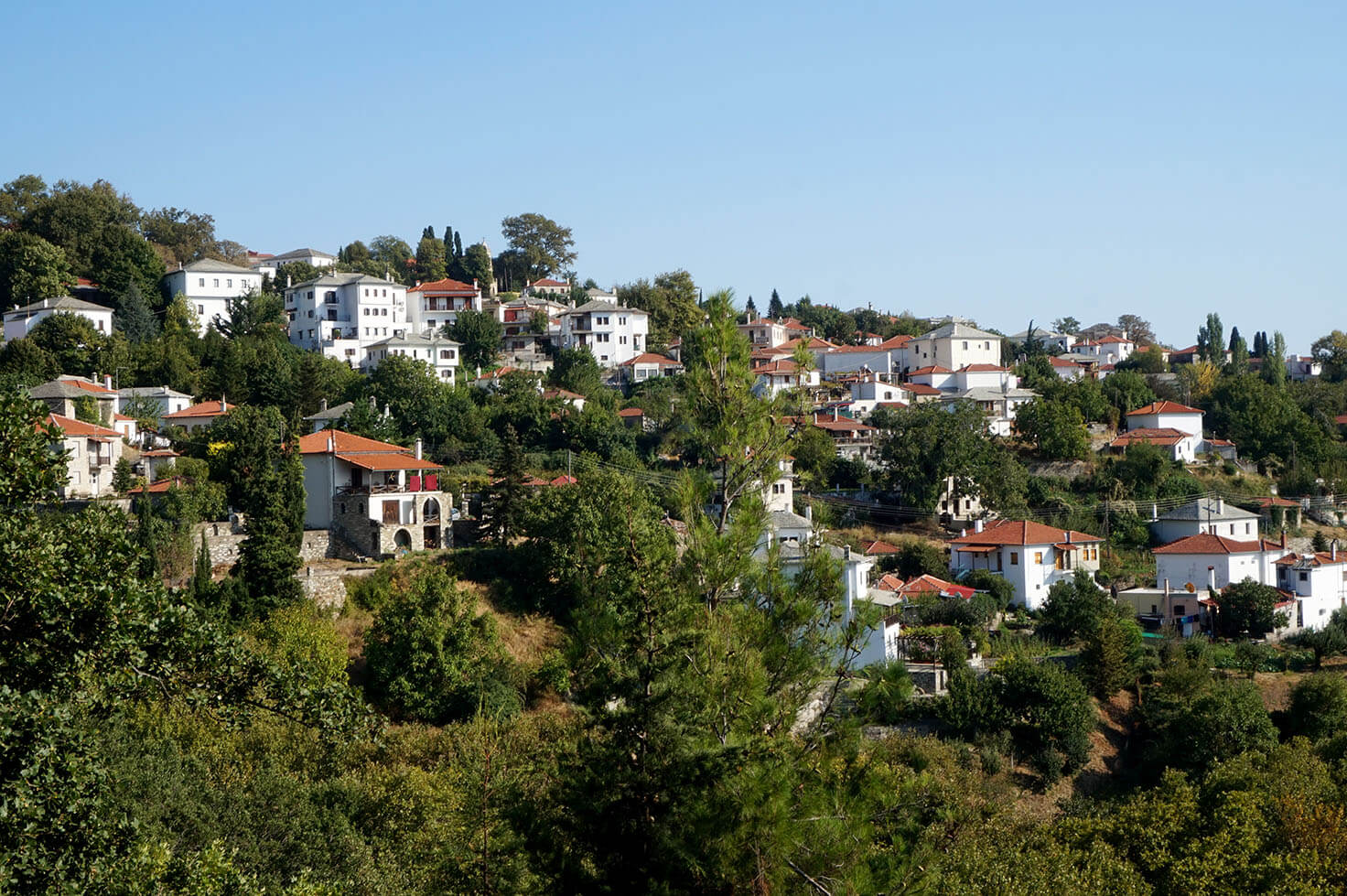
Among the 24 traditional villages of Pelion, Portaria is the most accessible. Located only 12 km (7 miles) from Volos, it’s easy to reach. In fact, most tourists stop here on their way to the Agriolefkes Ski Center.
The village has much to offer, from historical houses and churches to wonderful hikes and delicious food. If you want to experience a different side of Greece but don’t have much time, Portaria is the perfect place to go!
How to Get to Portaria
Buses from Volos
If you’re a fan of public transport like we are, you’ll be glad to know there is a public bus connecting Volos and Portaria. On weekdays, there are seven buses a day, while on weekends only four cover the route. The buses continue all the way to Makrinitsa, and the ride from Volos to Portaria takes about 30 minutes.
The buses depart from the KTEL station at the corner of Sekeri and Zachou Streets, next to the Old Town. They travel along Grigoriou Lambraki, Iasonos, and Kartali Streets before reaching the road to Pelion. On the way back, they follow Venizelou, Dimitriados, and again Grigoriou Lambraki Streets. There are many stops along the route. You can find the schedule here.
You can reach Volos by train, bus, or plane. We prefer trains, as they offer a more scenic journey. You need to take a train to Larissa first, then change to a regional train to Volos. Buses connect Volos with most cities in mainland Greece. Only a few airlines operate flights to Volos, and only during the summer.

Driving
If you plan to explore the wider region, you might consider renting a car. Many international car rental companies operate in Volos, including Hertz, Avis, and Budget. There are also several Greek companies worth considering.
To reach Portaria, follow the same route as the public bus. Take Kartali Street to the end, then turn left onto Mavili and right onto Iolkou. After a while, the road begins to climb and changes its name to Piliou. Along the way, you’ll pass through the village of Ano Volos.
You’ll know you’ve arrived in Portaria when the road splits in two. The left fork leads to Makrinitsa, while the right one continues toward the seaside. Take the latter, and after about 100 meters (330 feet), you’ll see a large parking lot. It’s free, but it can fill up quickly, so consider arriving early or later in the day.
What to Do in Portaria
Stroll through the Streets of Portaria
The best thing to do in Portaria is to get lost in its cobbled streets. There are two main roads dividing the village into three parts. We usually try to avoid them, as they can be busy with cars and lack sidewalks.
Plateia Portarias (Portaria’s main square) is close to the crossroad. It’s a spacious pedestrian area filled with plane trees, colorful flowers, and water fountains. Some of the trees are centuries old, providing much-needed shade.
A particularly interesting walk is through the area south of the square. Cross the main road next to the square and look for a small alley heading south. Just follow the narrow, winding streets until you reach Agios Georgios and Agioi Anargyroi churches. The views from there are breathtaking!

Visit an Ancient Church or Two
According to the most widely accepted theory, Portaria got its name from the old Panagia Portarea Church. This tiny church is located on the main Portarias Zagoras road, five minutes from the square. It’s a very small chapel situated next to the much larger Agios Nikolaos Church.
The first church on the site was built in the late 13th century. The interior features impressive frescoes from 1581, and the iconostasis dates back to the early 18th century. It is usually open to visitors.
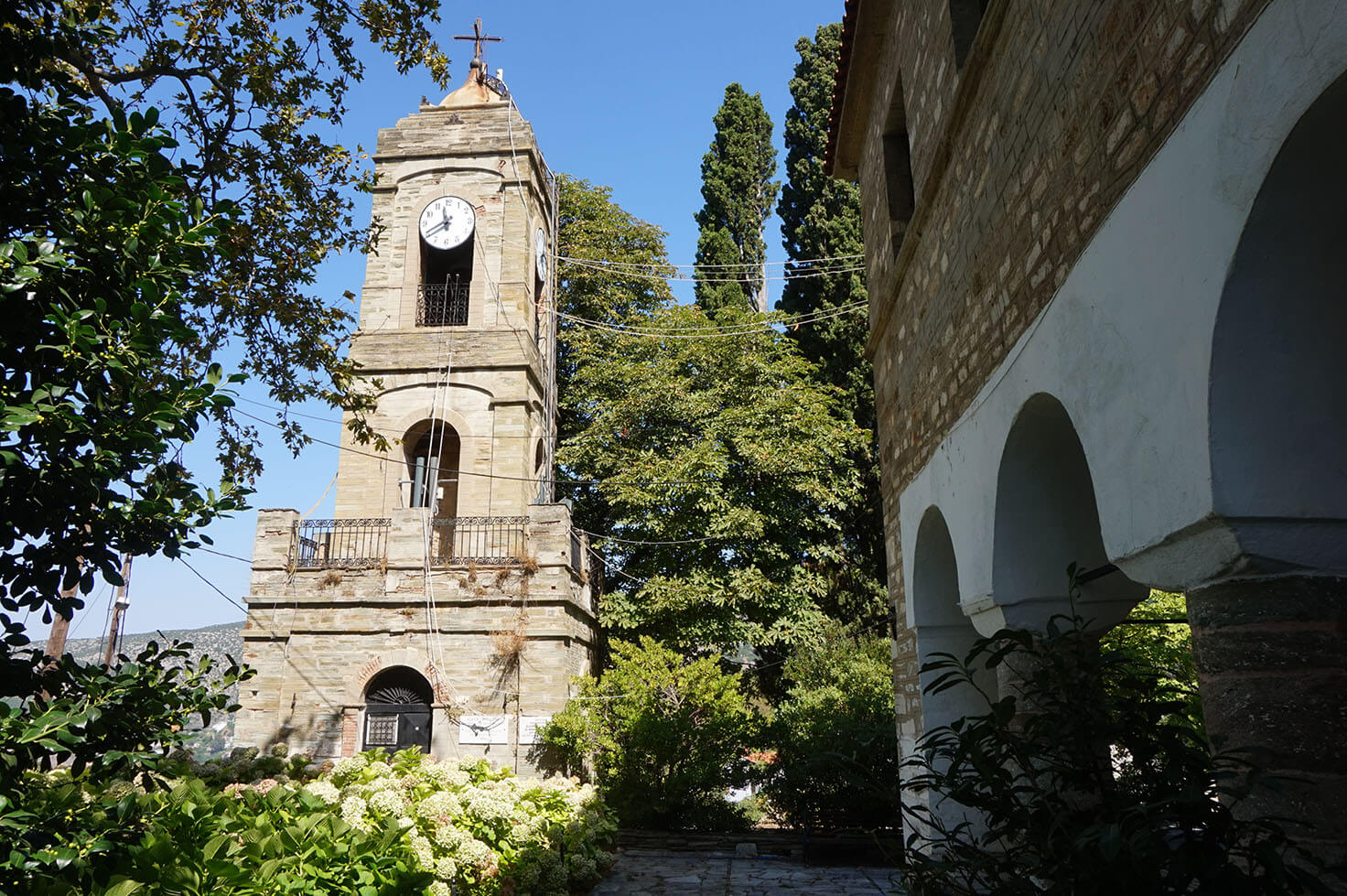
The adjacent Agios Nikolaos Church dates to 1856. It’s a three-aisled basilica with a richly decorated iconostasis and a beautiful bell tower. There is also a lovely courtyard and a monument dedicated to soldiers killed in World War I.

Walk along the Centaurs’ Path
The Centaurs’ Path is arguably the region’s most famous hiking trail. This 1.4 km (almost a mile) path starts north of the village center and ends to the northeast. To reach the starting point, walk about five minutes north from the crossroad toward Makrinitsa.
According to legend, the centaurs used this path to reach the eastern side of Mount Pelion. These mythical creatures were half-human, half-horse. The most famous centaur, Chiron, was known for his knowledge of art, science, and martial arts.
It’s a fairly easy hike through lush green forest. The path crosses over a small canal and ends at the beautiful Manas spring. Along the way, you’ll see plenty of plane trees, ivy, and ferns.

Visit the Portaria Museum
One thing that sets Portaria apart is its unique Egyptian houses. These historic homes were built by Greeks living in Egypt (known as Egyptiotes), who would spend their summers here.
A typical Egyptian house is a two or three-story mansion with a central double staircase and a balcony on the last floor. Notable examples include the old Town Hall and the Kantartzi, Tsopotou, and Zoulias Mansions.
In 1995, the Zoulias Mansion was turned into the Portaria History Museum. Inside, you’ll find photos, documents, postcards, clothing, and household utensils related to the village. There’s also handmade embroidery.

Eat Like a King (or a Queen)
Just like elsewhere in Greece, the food in Portaria is delicious. Most local restaurants serve dishes made from fresh ingredients sourced from Mount Pelion. The most famous local dish is spetzofai, a spicy sausage stew.
Every visitor to Portaria should have breakfast, lunch, or dinner at Kritsa Gastronomy Hotel. They serve homemade Pelion dishes in a pleasant setting right on the square. We recommend the traditional trachanas pasta with feta and smoked pepper.
Another great spot to try local food is Agora 1955, an elegant restaurant and wine bar. Their highlights include handmade pies and loukoumades (Greek doughnuts), and they offer a wide selection of wines.

Spend a Night in an Archontiko House
You can’t leave Portaria without spending a night or two. And there’s no better way to experience the village than staying in an Archontiko (old mansion) house. You can choose between Egyptian-style and traditional Ottoman-style mansions.
Archontiko Kantartzi is our favorite choice. Located right next to the Portaria Museum, it offers beautifully decorated rooms with stunning views. If you prefer staying a bit off the beaten path, consider Despotiko. It includes two historic houses and a large pool.
We stayed at Archontiko Naoumidi, a lovely neoclassical mansion just off the main road. Our spacious room featured traditional furniture, the pool was great, and breakfast was both abundant and delicious. The hotel staff made us feel truly welcome.

Buy Spices or Sweets in a Cool Shop
If you want to bring home a souvenir, we suggest choosing something useful, like sweets or spices. Pelion is known for its aromatic herbs, including oregano, sage, thyme, and mountain tea.
Myrro Herbs is the best place to shop for herbs and spices. Their friendly staff will recommend the best herbs and teas and may even share a bit of local history. They offer an impressive selection of products.
Another place worth visiting is the Women’s Agricultural Association of Portaria. It was founded in 1997 by local women determined to preserve the region’s culinary traditions. Their shop is renowned for spoon sweets like pecan pie, kadaifi, baklava, and marmalade.

Go to Makrinitsa
You can’t leave Pelion without visiting Makrinitsa. While Portaria is a lovely village, Makrinitsa is exceptional. We even believe it’s the most beautiful village in Greece!
Makrinitsa is known as the ‘Balcony of Pelion’ thanks to its stunning views. The village sits at the end of the road and is entirely pedestrian. You’ll find numerous historic Ottoman houses, ancient churches, and scenic hiking trails.
Makrinitsa is just 3 km (1.9 miles) from Portaria, and you can reach it in about half an hour on foot. You can also take a public bus, but make sure to check the schedule. If you’re driving, there’s a parking lot at the entrance of Makrinitsa.


