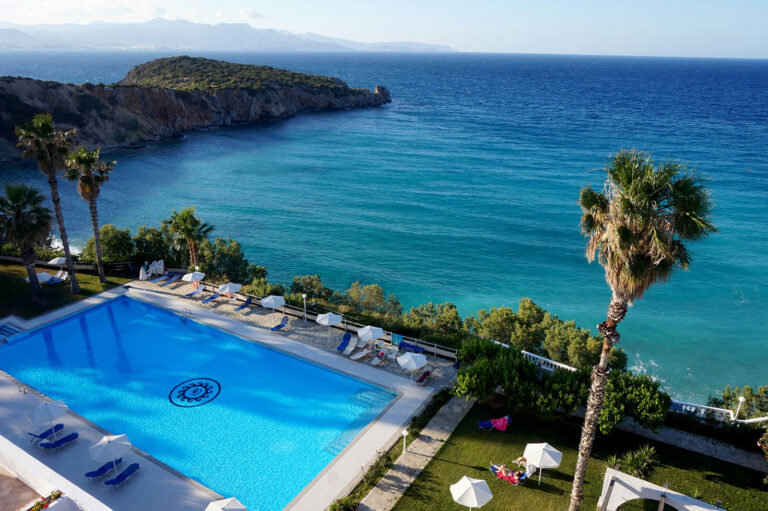
Top Places to Visit in Chania Town
Chania is one of our favorite places in all of Greece. This beautiful Cretan city boasts a rich history and a promising future. There are so many wonderful places to visit in Chania Town that you’ll need at least a couple of days.
Most of the city’s attractions are located within the gorgeous Old Town. The historic center of Chania is a maze of winding streets and alleys covering an area of roughly 1 km² (0.4 square miles).
But Chania is much more than that. There are beautiful beaches, charming neighborhoods, and the new Archaeological Museum, which will take your breath away. So, plan your trip accordingly and enjoy every moment!

The Old Harbor
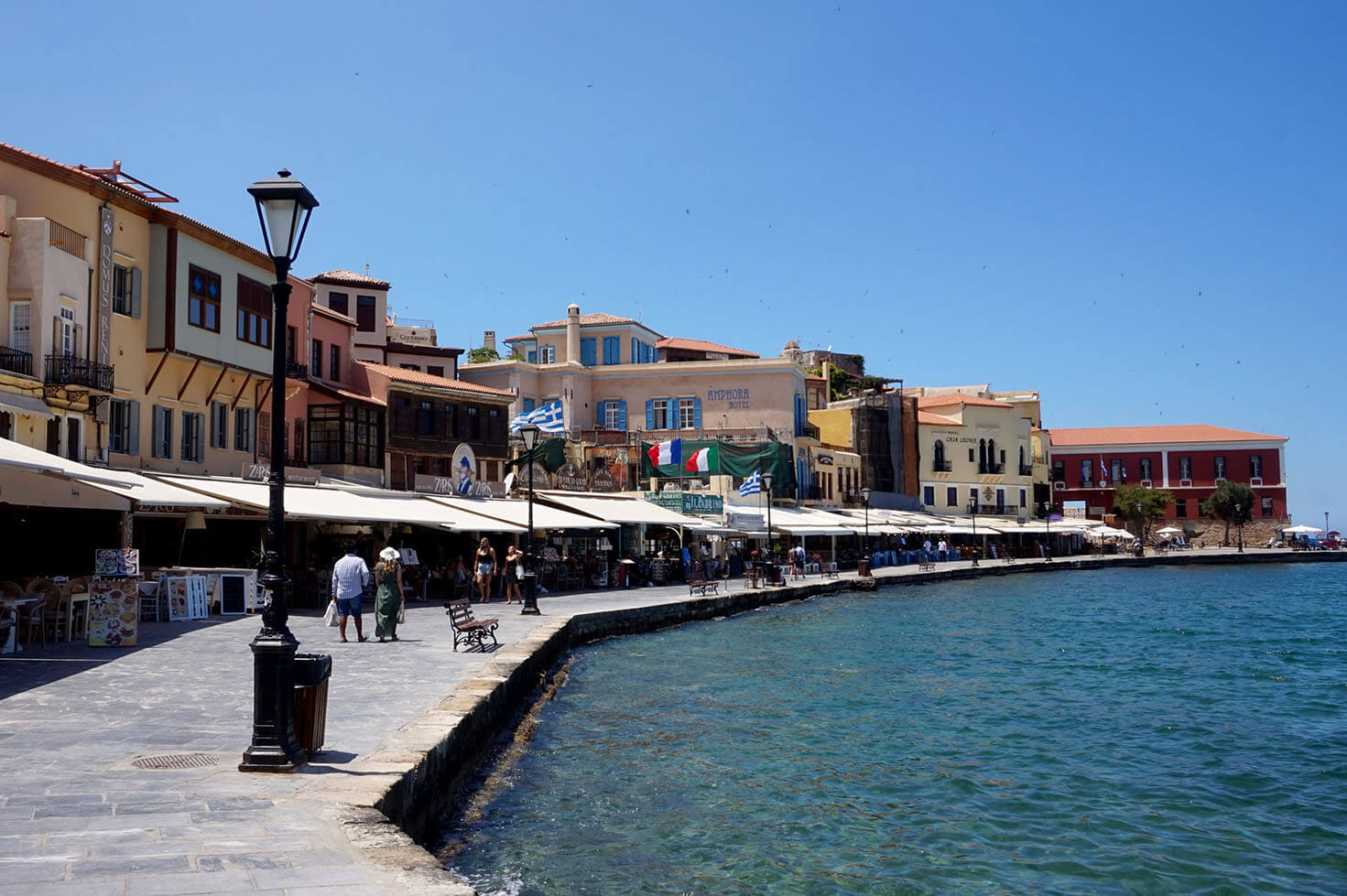
The centerpiece of the Old Town is the colorful Venetian Harbor. Built by the Venetians in the 14th century, it is also known as the Old Harbor.
Today, it’s a lively seaside promenade filled with restaurants, bars, hotels, and shops housed in historic buildings. The large Venizelou Square, with its central fountain, is located next to the harbor.
The most famous structure in the harbor is the 16th-century Lighthouse of Chania. Originally built by the Venetians, it was restored by the Egyptians in 1839. Don’t miss the 17th-century Küçük Hasan Pasha Mosque.
Maritime Museum of Crete
The Maritime Museum of Crete showcases ships, nautical instruments, photographs, paintings, and war relics from the Bronze Age to modern times.
The main building is located at the western end of the Venetian Harbor, inside Firka Fortress. Here, you’ll find several ship models, city dioramas, and a collection of marine flora and fauna.
A smaller building at the northeastern edge of the Old Town displays examples of ancient naval architecture, including a replica of a Minoan ship.

Fortifications
If there’s one structure that truly reflects Chania’s rich history, it’s the imposing city walls. The Inner Walls date back to antiquity, while the Outer Walls were built during the Venetian era.
The Outer Walls are much better preserved. They begin at Firka Fortress by the Maritime Museum and continue as the San Salvatore Bastion, the Western Wall, and the San Dimitrio – Lando Bastion.
The wall extends eastward with the Santa Lucia Bastion, the Eastern Wall, and the Mocenigo Bastion. You can access the San Salvatore Bastion and the Western Wall.

Topanas and Evraiki
Chania’s most atmospheric neighborhoods and the best area to stay are Topanas and Evraiki. Topanas lies west of the Venetian Harbor, while Evraiki is located just south of it.
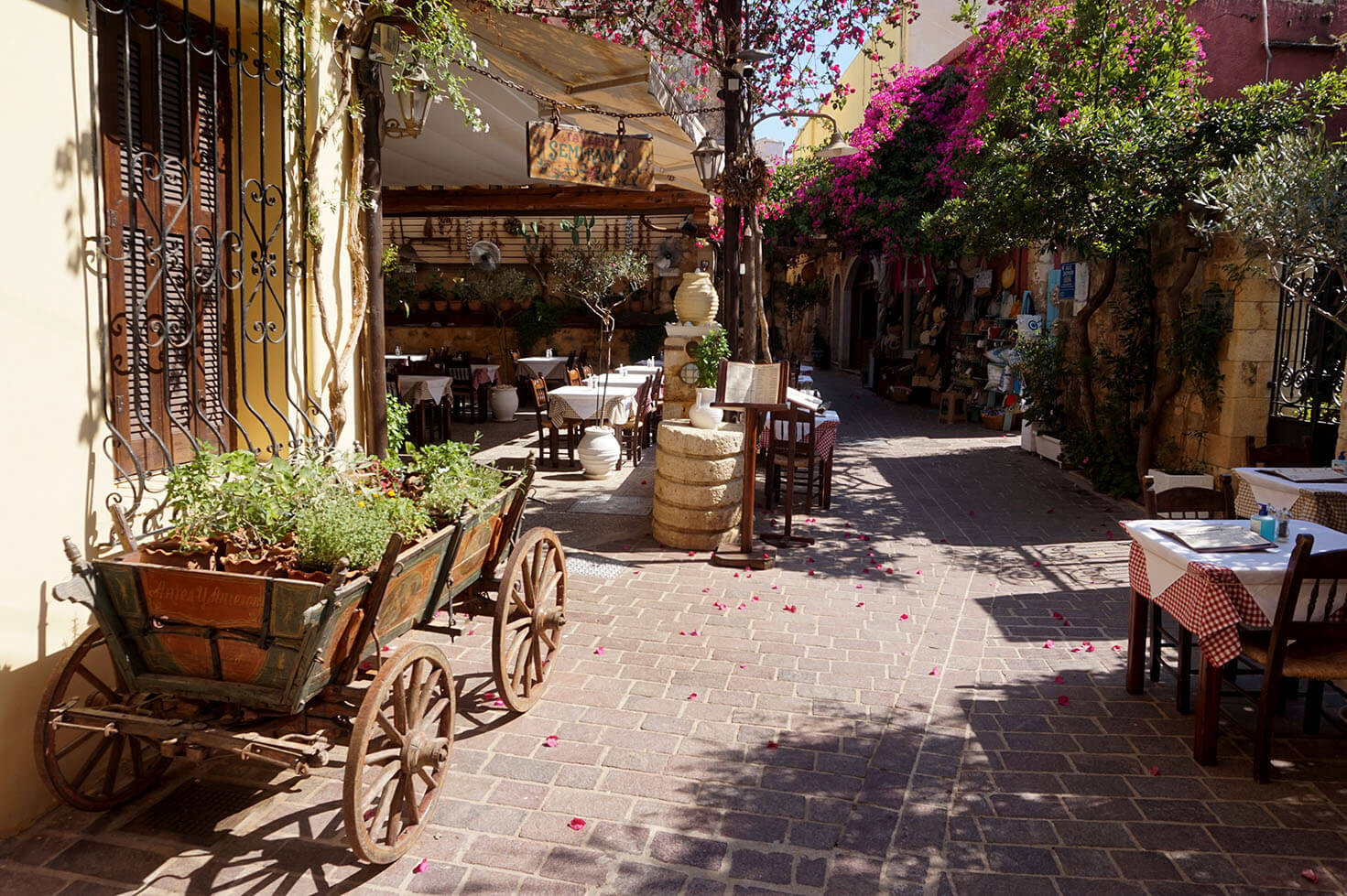
During Ottoman times, Topanas was the Christian quarter. Today, this charming neighborhood is filled with small shops, restaurants, and bars. Its main street is the historic Theotokopoulou Street.
Evraiki was the city’s Jewish neighborhood during the Ottoman period. It begins south of Zampeliou and Douka Streets and stretches all the way to the Lando Bastion. Don’t miss the Etz Hayyim Synagogue, the only surviving synagogue in Crete.
The Cathedral
The Presentation of the Virgin Mary Holy Metropolitan Church is Chania’s Orthodox Cathedral. The original church on this site was built in the 11th century.
When the Venetians conquered the city, they demolished the church and built a warehouse. The Ottomans later turned the warehouse into a soap factory, which operated until 1950.
The current church was constructed between 1950 and 1960 in a neoclassical style. It is a three-nave basilica with a clock tower. The frescoes and iconostasis were created by some of Crete’s most renowned artists.

The Old Market
The Municipal Market of Chania is one of the city’s most iconic buildings. This historic covered market is also known simply as the Agora.
Built between 1909 and 1913, it was modeled after a market in Marseille. A large section of the Venetian wall had to be demolished to make space for the structure. The building has a cross-shaped layout with four entrances.
Inside, you’ll find everything from fruits and vegetables to fish, meat, cheese, and spices. It is currently closed for renovation but is expected to reopen soon.

Church of Saint Nicholas
The Church of Saint Nicholas is arguably the most unusual church in all of Greece. It is the only one in the country with both a bell tower and a minaret.
Originally built as a Catholic church in 1320, it was converted into a mosque during Ottoman rule. During that time, it housed the sacred sword of a Turkish Dervish.
In 1918, it was converted into an Orthodox church. The original bell tower in the northeastern corner did not survive, and the current one on the western side dates back to 1918.

Splantzia
Splantzia occupies the largest section of Chania’s Old Town, lying south and east of Kastelli (the Inner City Walls). During the Ottoman era, this was where the Turkish population lived. The heart of the area is Splantzia Square, home to the Church of Saint Nicholas.
Splantzia is a labyrinth of narrow streets and alleys, each with its own story. The most famous is Sifaka Street, also known as Knife Street. Here, you’ll find shops selling handmade knives engraved with poems.
Don’t miss the Catholic Church of San Rocco on Splantzia Square, the nearby Orthodox Church of the Holy Unmercenaries, and the Church of Agios Eleftherios.

Archaeological Museum of Chania
The Archaeological Museum of Chania houses a rich collection of Minoan and Roman artifacts from Chania and the surrounding area.
Founded in 1962, it was originally located in the old Venetian Monastery of Saint Francis, across from the Chania Cathedral.
Since 2022, the museum has been located in a modern building in the Halepa neighborhood. You can walk there from the Old Town or take an inexpensive taxi.

Nea Chora Beach
You can’t leave Chania without visiting at least one of its stunning beaches. In fact, the Chania region is home to some of Crete’s most beautiful beaches.
Just visit Balos or Elafonisi, and you’ll feel like you’re on another planet. We even spent the night at Elafonisi and enjoyed the morning there without the crowds.
There are also a few nice beaches within the city. Nea Chora is the closest to the center and is well worth visiting, even in winter.