Architecture of Greece through the Centuries
There is nothing like Greece. Located at the southeastern corner of Europe, where the Aegean meets the Ionian Sea, it has always been in the world’s spotlight. Not only that, but many consider it the cradle of Western civilization.
Ancient Greek architecture has influenced numerous artistic styles across the world. Greece was later ruled by the Roman and Byzantine Empires, during which Greek played a crucial role, as well as by the Venetians and the Ottomans. They all left a distinct mark.
After liberation, the neoclassical style dominated the country, eventually making way for splendid modern architecture. Today, impressive contemporary landmarks dot the streets of Athens and other large cities.
Ancient Greece
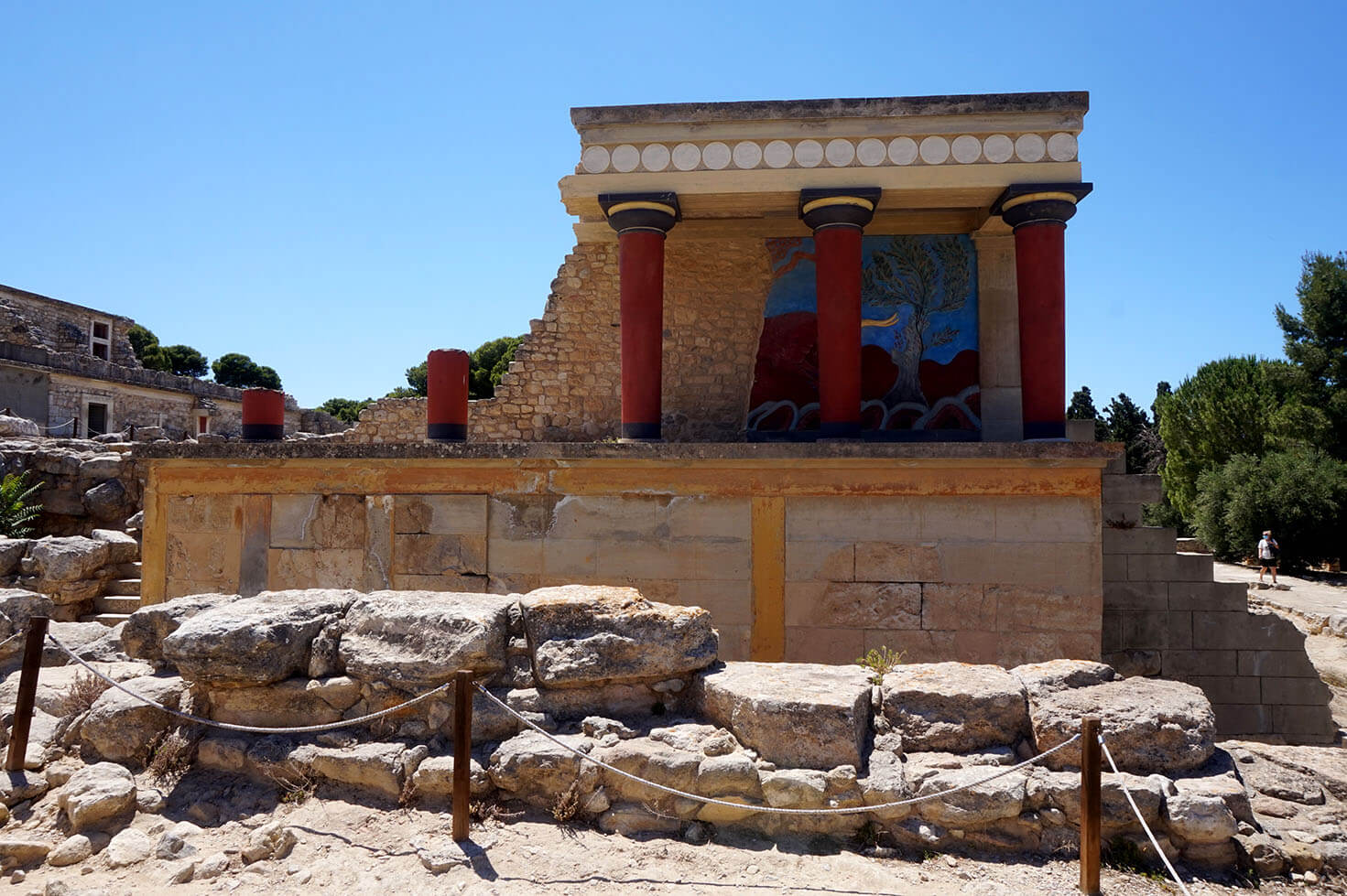
Between 2700 and 1450 BC, the Minoan civilization flourished on the island of Crete. The Palace of Knossos dates from that period. A bit later, from 1600 to 1100 BC, the Mycenaean civilization appeared on the mainland.
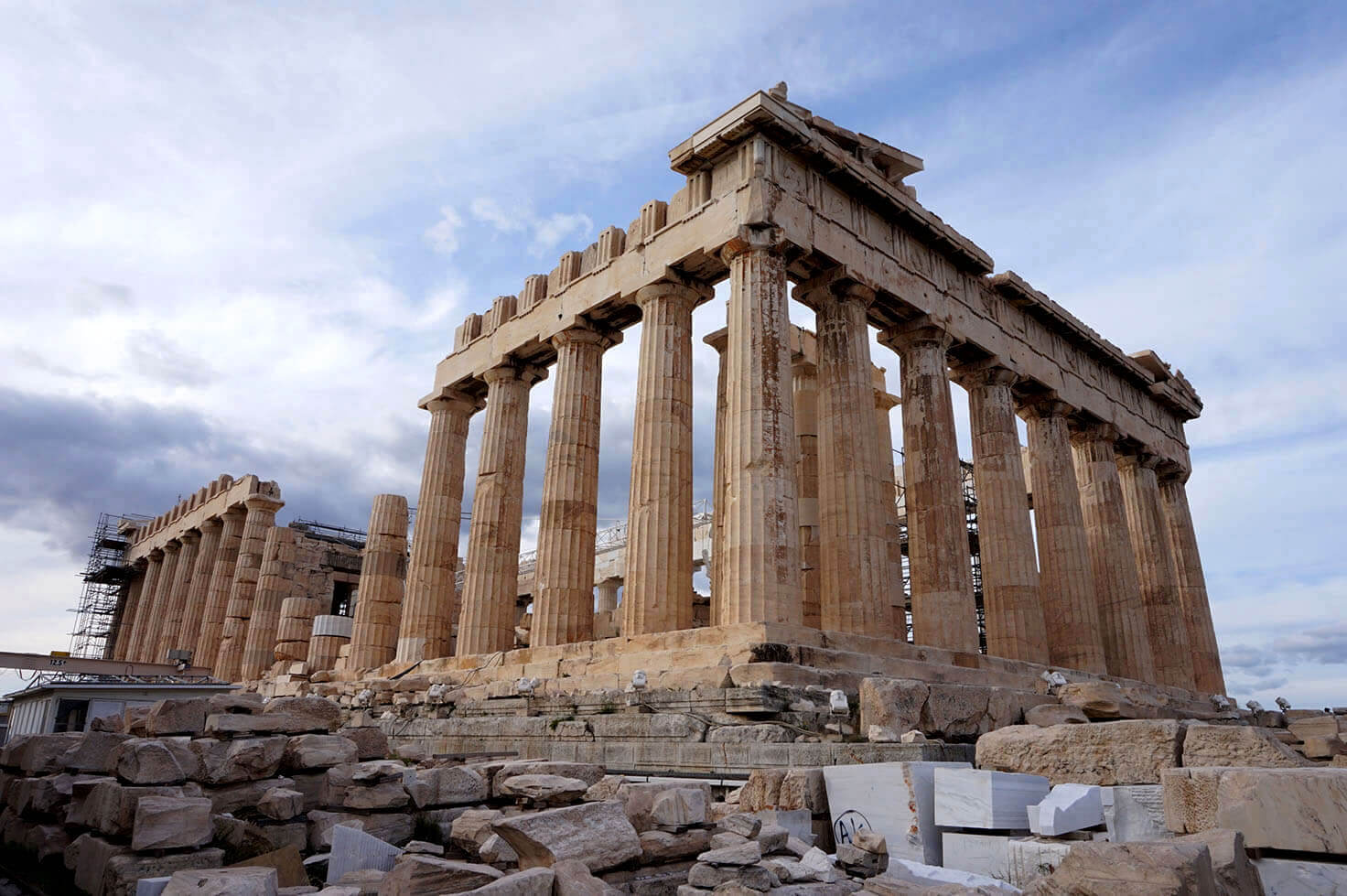
After centuries of population decline, the Greek city-states united to defeat the Persian Empire. The golden age of Greek culture began. The most notable structures from this period include temples and amphitheaters. Three different styles dominated the period: Doric, Ionic, and Corinthian.
Numerous archaeological sites in Greece still showcase their former glory. From Delphi, Epidaurus, and Olympia to Delos, Lindos, and Akrotiri, you’ll find them all over the country. Let us not forget the Acropolis of Athens, the symbol of Classical Greece.
Roman Empire
Greece fell under Roman rule in 146 BC, after the Battle of Corinth. The Romans divided the territory into Macedonia in the north, Epirus in the center, and Achaia in the south. Thrace in the east was added later.
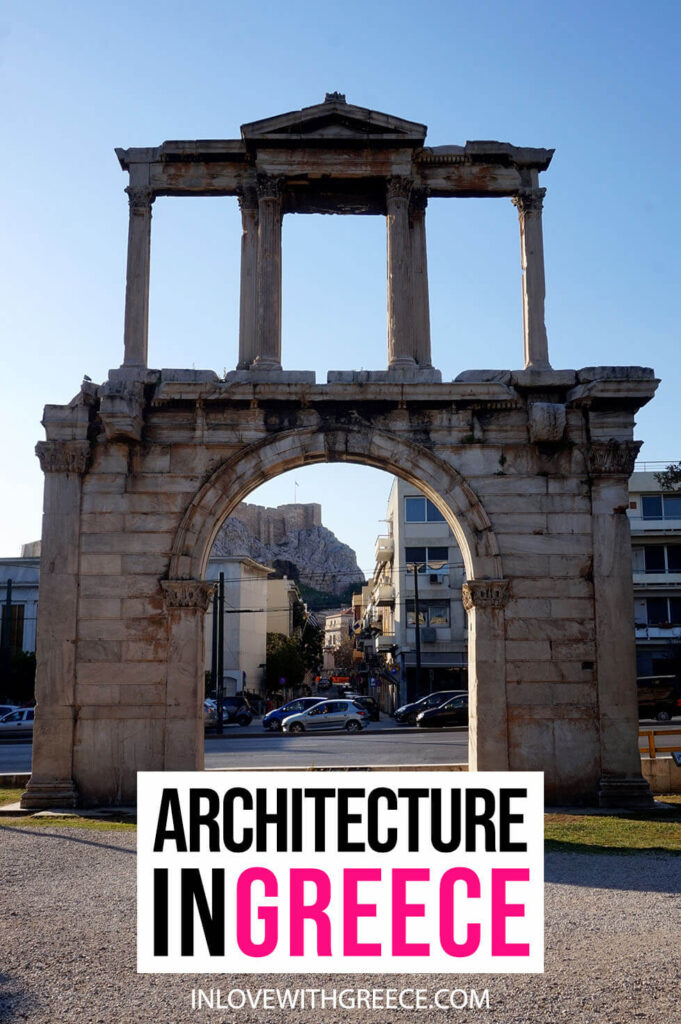
The Romans admired ancient Greek culture so much that they developed their own architecture from it. Roman architecture followed the same principles as Greek architecture, but it also introduced new materials, shapes, and styles.
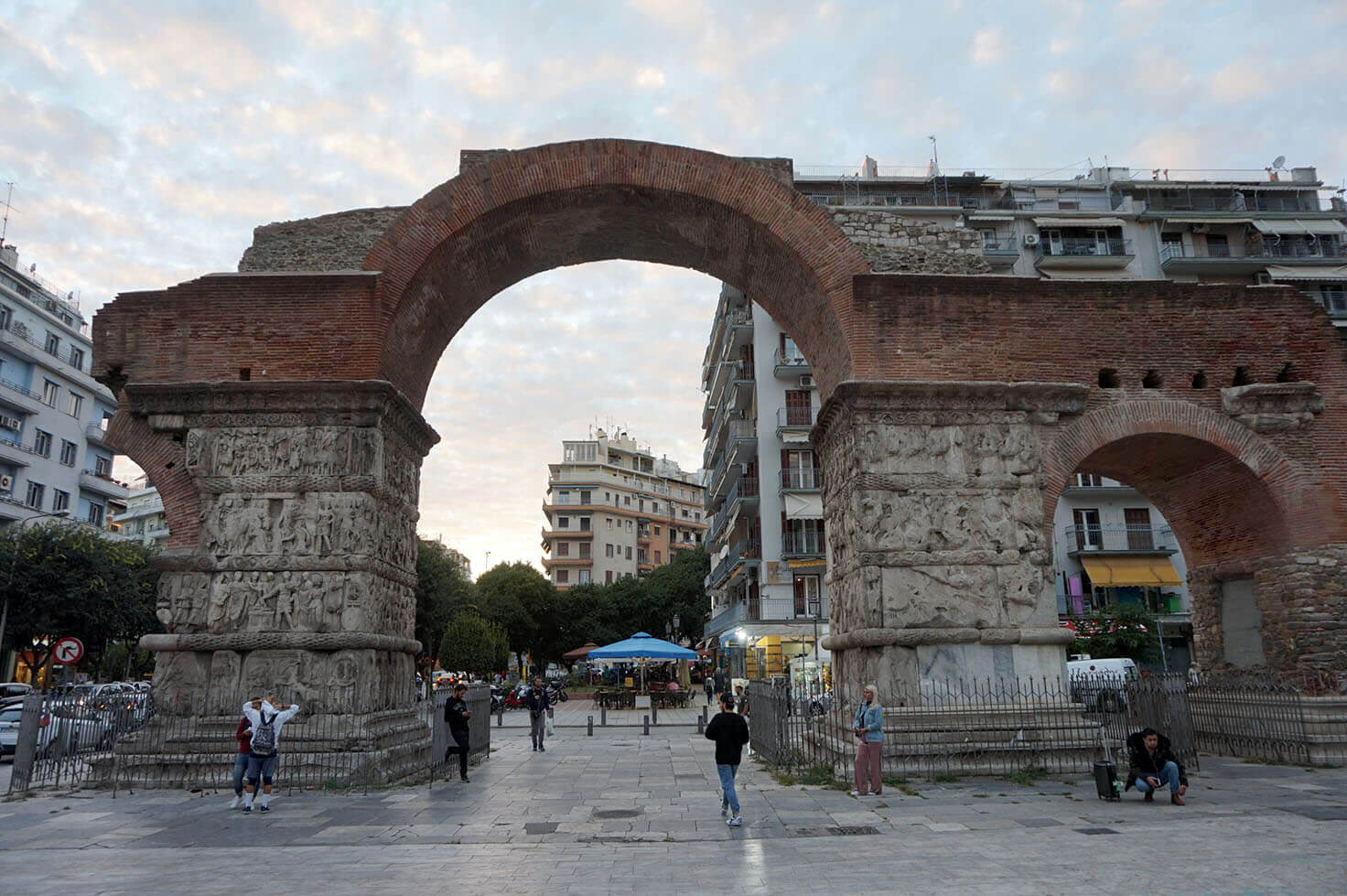
We can find the most famous examples in Athens and Thessaloniki. The Roman Agora, the Odeon of Herodes Atticus, and the Temple of Olympian Zeus are some of Athens’ main landmarks. The Rotunda and the Arch of Galerius are Thessaloniki’s jewels.
Byzantine Kingdom
In 395 AD, the Roman Empire split in two. The western part, with its center in Rome, was eventually destroyed by Germanic tribes. The Eastern Roman Empire, also known as the Byzantine Empire, lived much longer, until its capital, Constantinople, was conquered in 1453 AD.
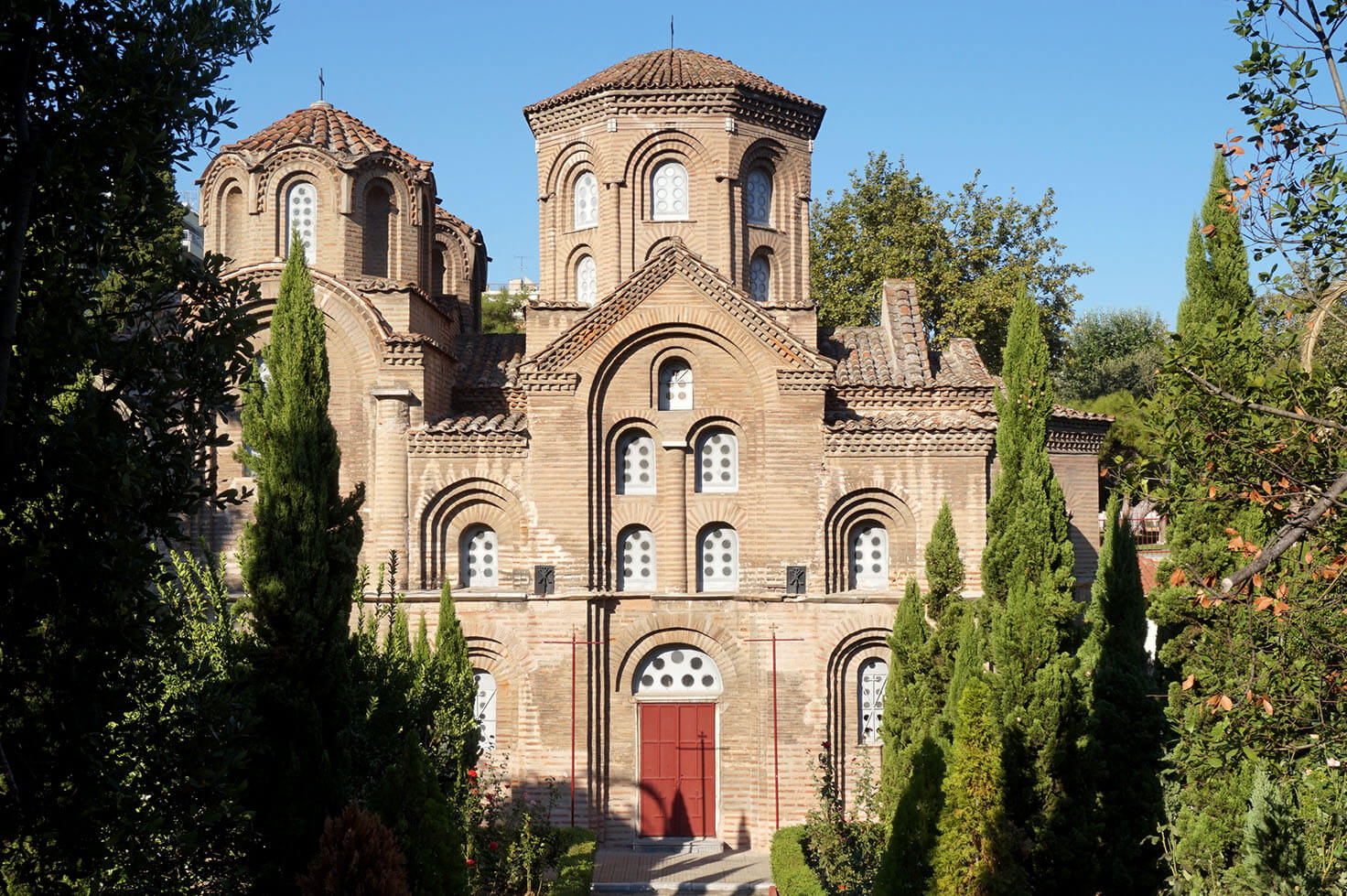
Greece, which was entirely within Byzantine territory, managed to largely escape the barbarian invasions. In the 7th century, Greek culture became dominant in the empire. Byzantine architecture is known for its churches with red and yellow brickwork, Greek-cross plans, and domes over square spaces.
Numerous monuments from Byzantine times still exist. The best place to visit them is Thessaloniki, whose churches, baths, and ancient walls are a UNESCO World Heritage Site. There are also more than a dozen Byzantine churches in Athens.
Venetian Rule
Though Venice never took hold of the Greek mainland, with a few exceptions, it did control several islands. Crete was the first to fall under Venetian rule in 1205. It remained under Venetian control until 1669.
Corfu was part of Venice for more than 400 years, Zakynthos and Cephalonia for three hundred years, and Lefkada for about a century. Several places in the Peloponnese were Venetian during different periods. The most notable examples are Nafplio and Monemvasia.
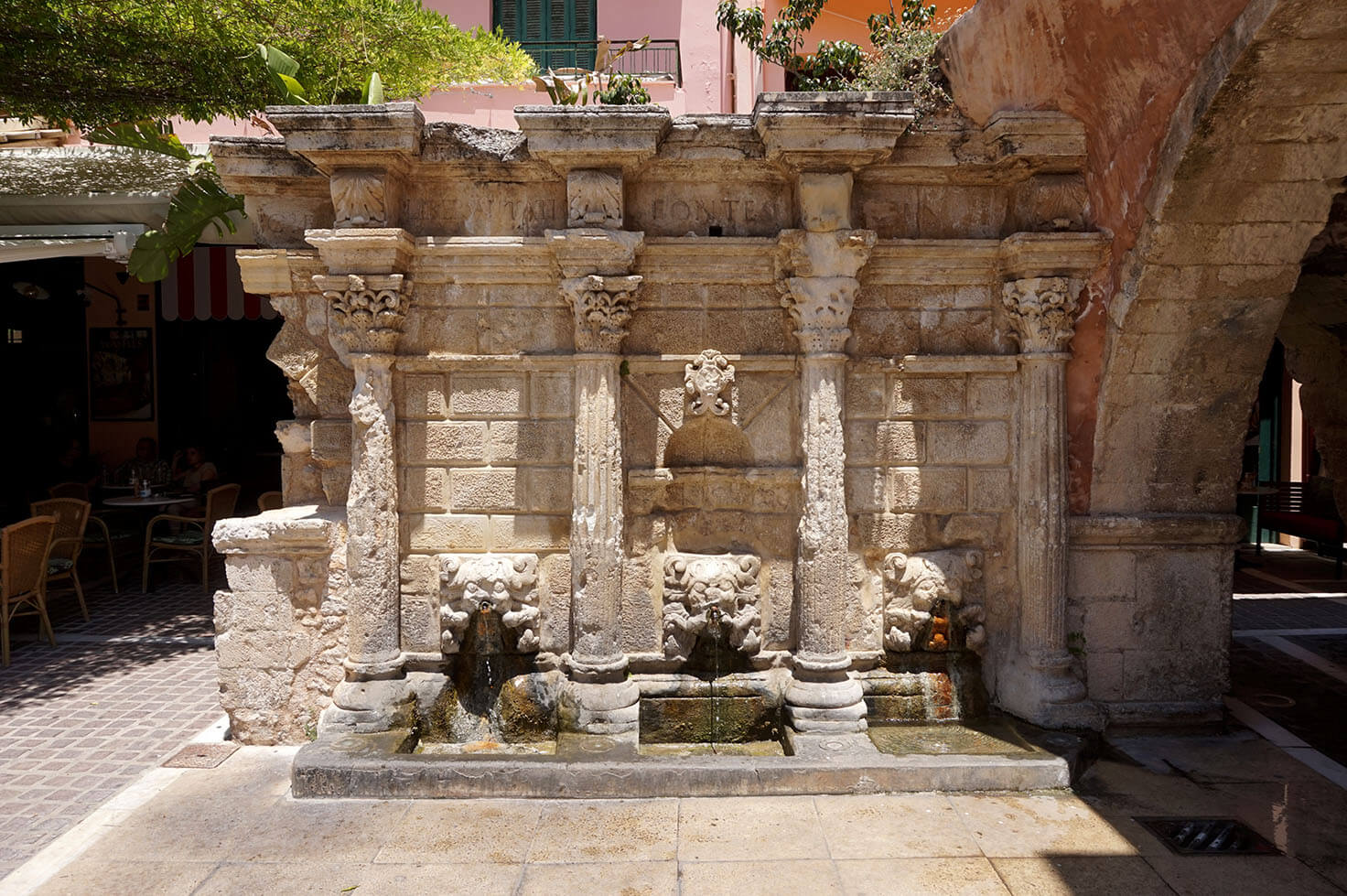
To get to know Venetian heritage in Greece, go to Crete. Chania, Rethymno, and Heraklion still preserve many structures from this period, including bastions, ramparts, loggias, and arcades. Another distinctly Venetian city is Corfu Town.
Ottoman Empire
The Ottomans arrived in Greece in the 15th century. The entire Greek mainland was conquered by the end of the 15th century, while Crete became Ottoman in the late 17th century.
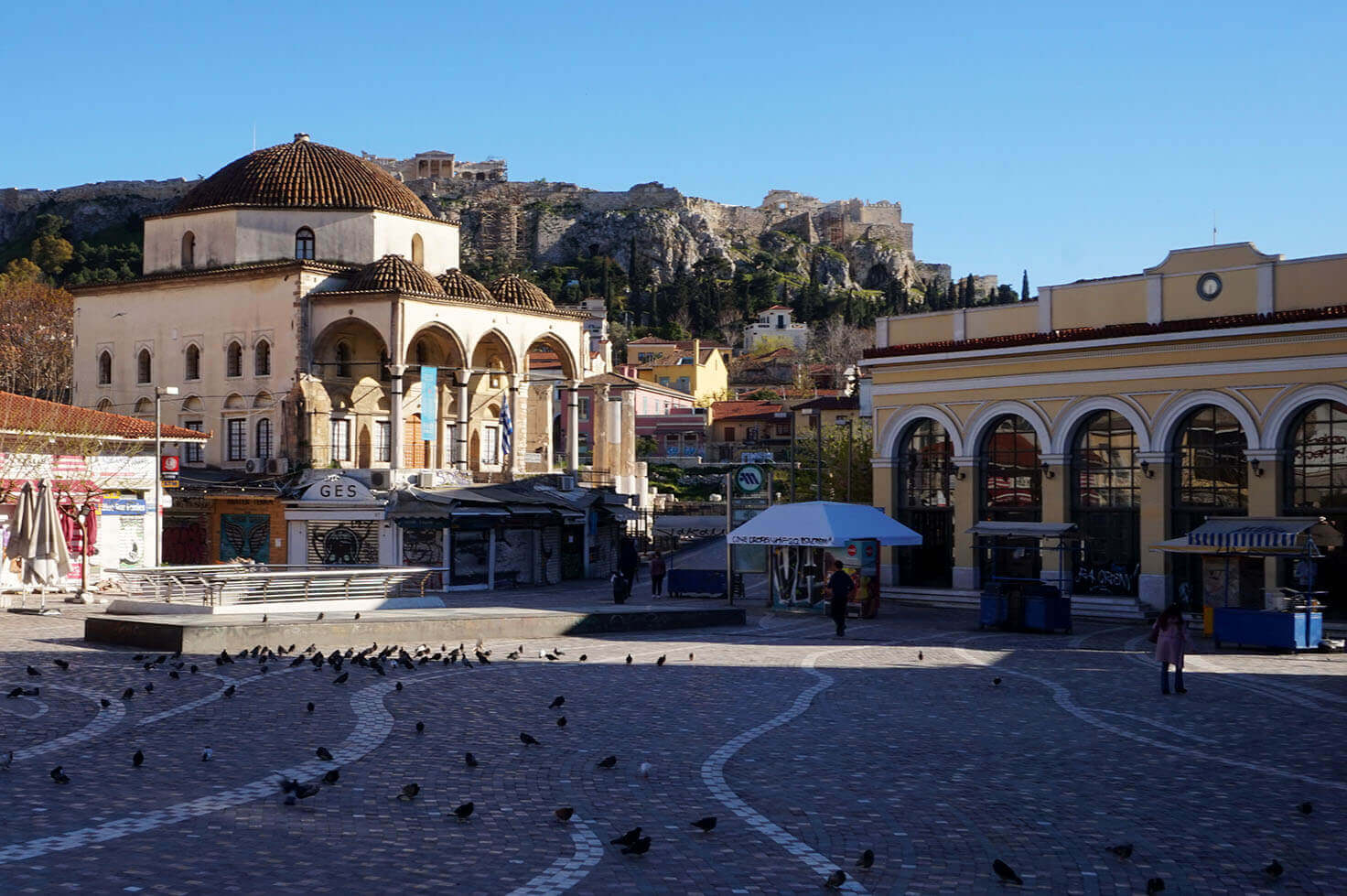
During the 400 years of Ottoman rule, many mosques, covered markets, baths, and fortifications were built. Northern Greece, including Macedonia, Epirus, and Thrace, remained under Ottoman rule for almost 500 years.
Thessaloniki is the best place to look for Ottoman architecture. It was the second-most important city in the empire, and quite a few monuments from that period still stand. Other great places with plenty of heritage are Ioannina, Veria, Kavala, and Rhodes. The impressive monasteries of Meteora were also built during the Ottoman Empire.
Neoclassical Architecture
After the liberation of Greece in the 19th century, the Greek authorities sought to create a new national architectural identity. Naturally, the neoclassical style was chosen because it was directly inspired by ancient Greek art.
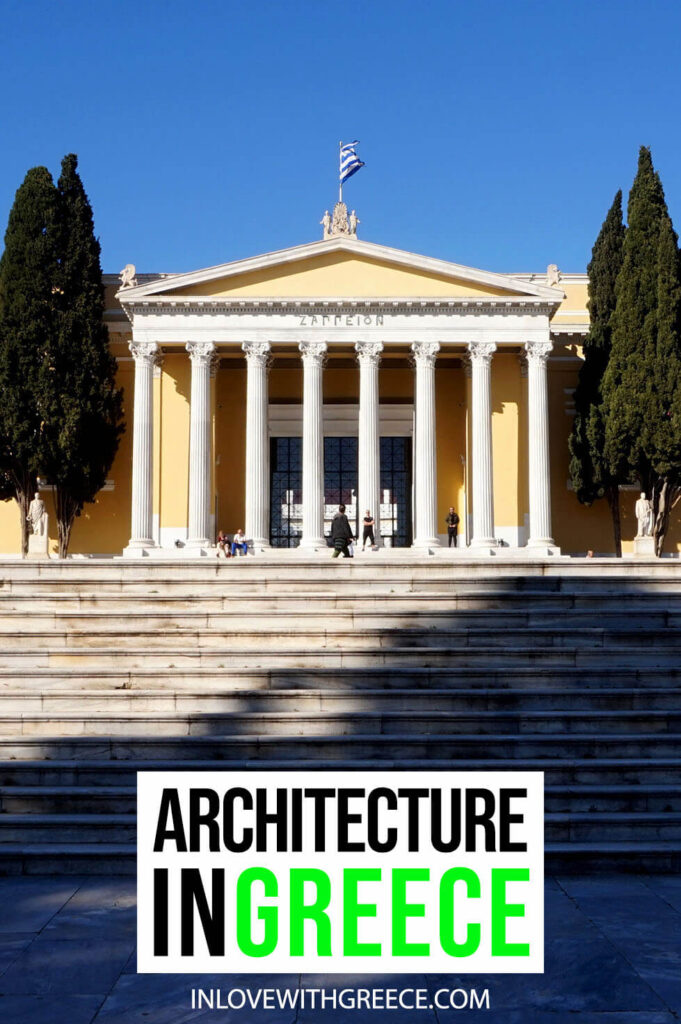
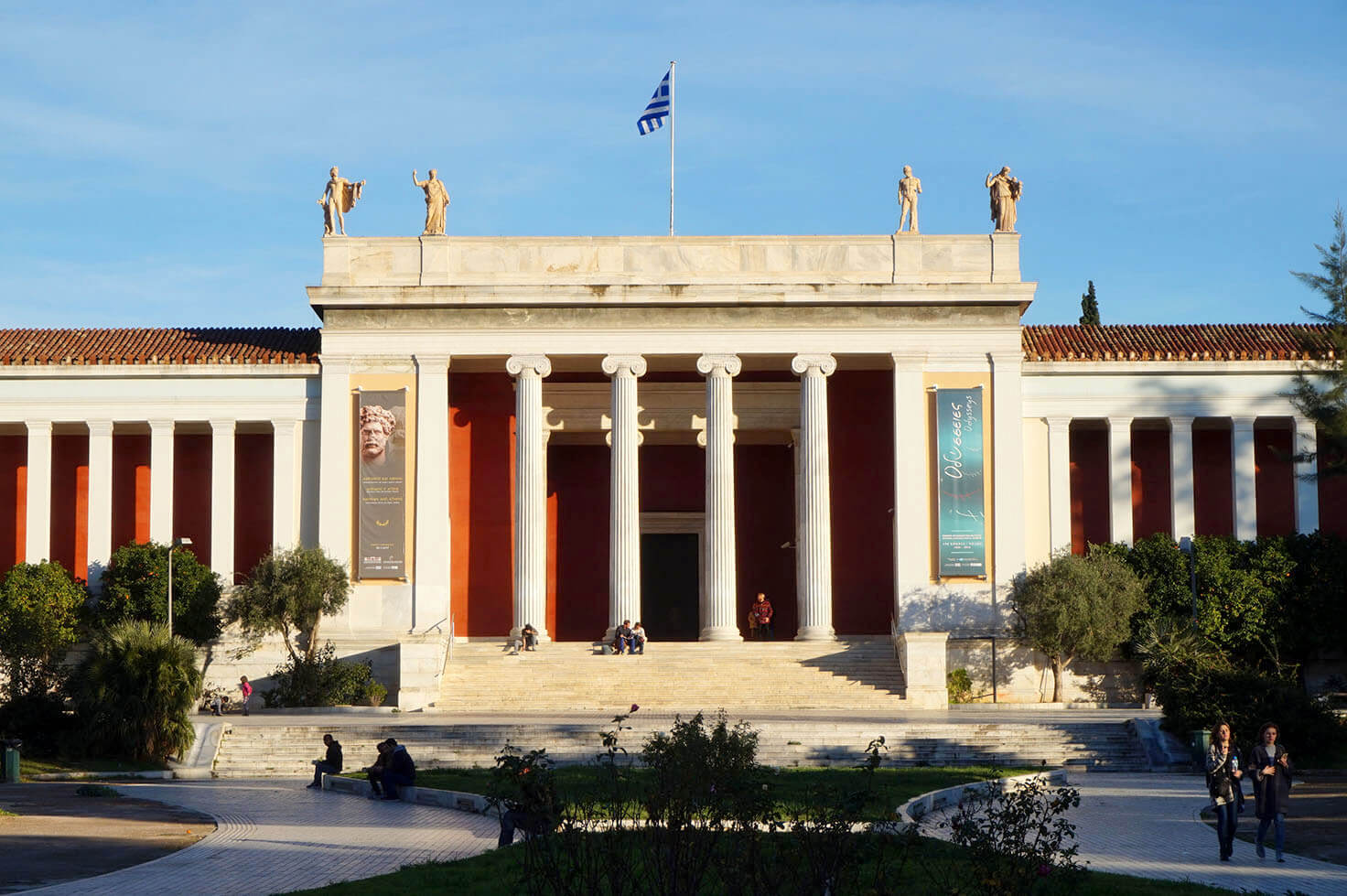
Many foreign architects were hired to transform Greek cities into modern European metropolises. Colorful neoclassical palaces popped up all over the country. They stand out for their symmetry and proportions and for their use of classical Doric, Ionic, and Corinthian columns.
Danish and German architects were involved in Athens’ new city plan. Numerous neoclassical buildings were erected, with the most notable examples being the Hellenic Parliament, the Academy of Athens, the National Library of Greece, the University of Athens, and Zappeion.
Modern and Contemporary Architecture
At the beginning of the 20th century, Greek society was deeply conservative. Thus, neoclassical architecture remained the dominant style for a while. That said, there were a few examples of Art Nouveau and Art Deco.
Modern architecture appeared in large cities between the two world wars. However, it only took hold after World War II. Athens hosts some of the best examples of modern architecture, including the former Hilton Hotel, the American Embassy, and the National Museum of Contemporary Art.
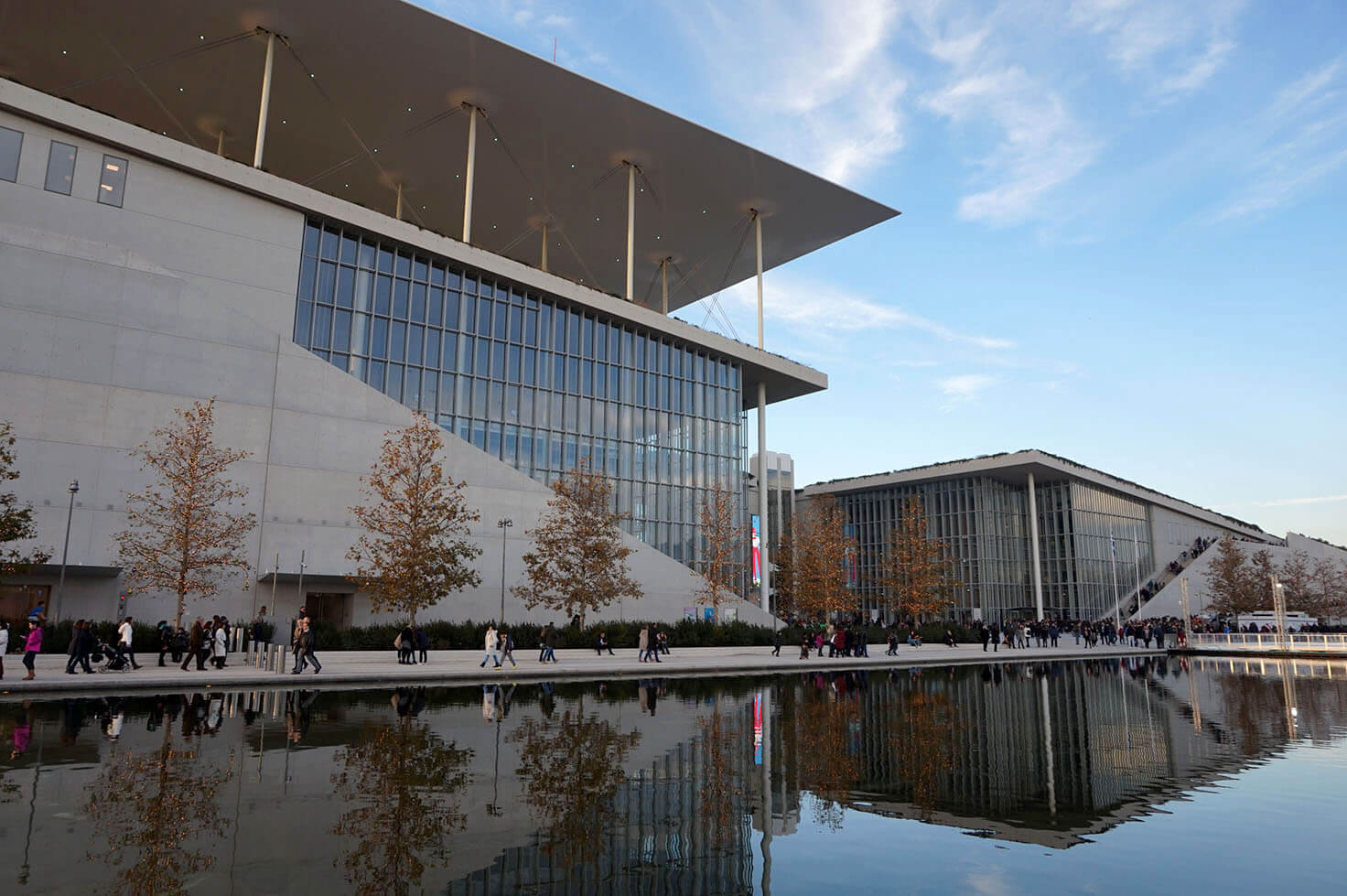
Though we can’t say that Greece is the best place to look for incredible contemporary architecture, three buildings in Athens stand out: the reconstructed Athens Olympic Complex, the New Acropolis Museum, and the Stavros Niarchos Foundation Cultural Center.
Vernacular Architecture
When we talk about different architectural styles and periods, we usually mention buildings like churches, mosques, and palaces designed by architects. But Greece is also home to some outstanding vernacular architecture.
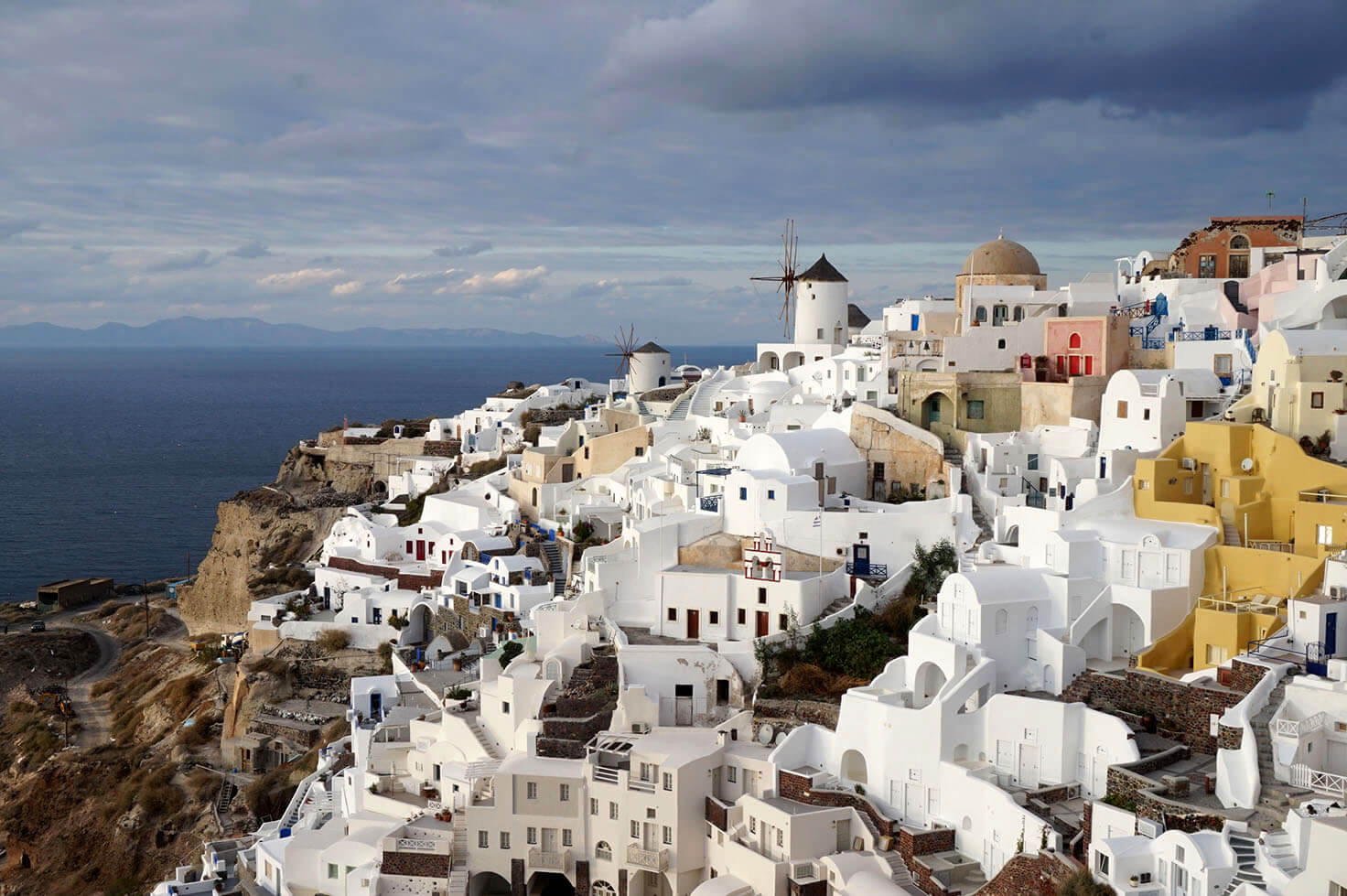
Most of you have probably seen photos of a typical Greek island with whitewashed houses, windmills, and churches with colorful domes. We are talking about the iconic Cycladic architecture.
On the other hand, on the Greek mainland, there are quite a few villages and towns with unique oriental layouts. After centuries of Ottoman rule, it is no wonder that many settlements still bear its distinct identity. Our favorite place to visit them is Mount Pelion, north of Volos.
Staying in an Architectural Landmark
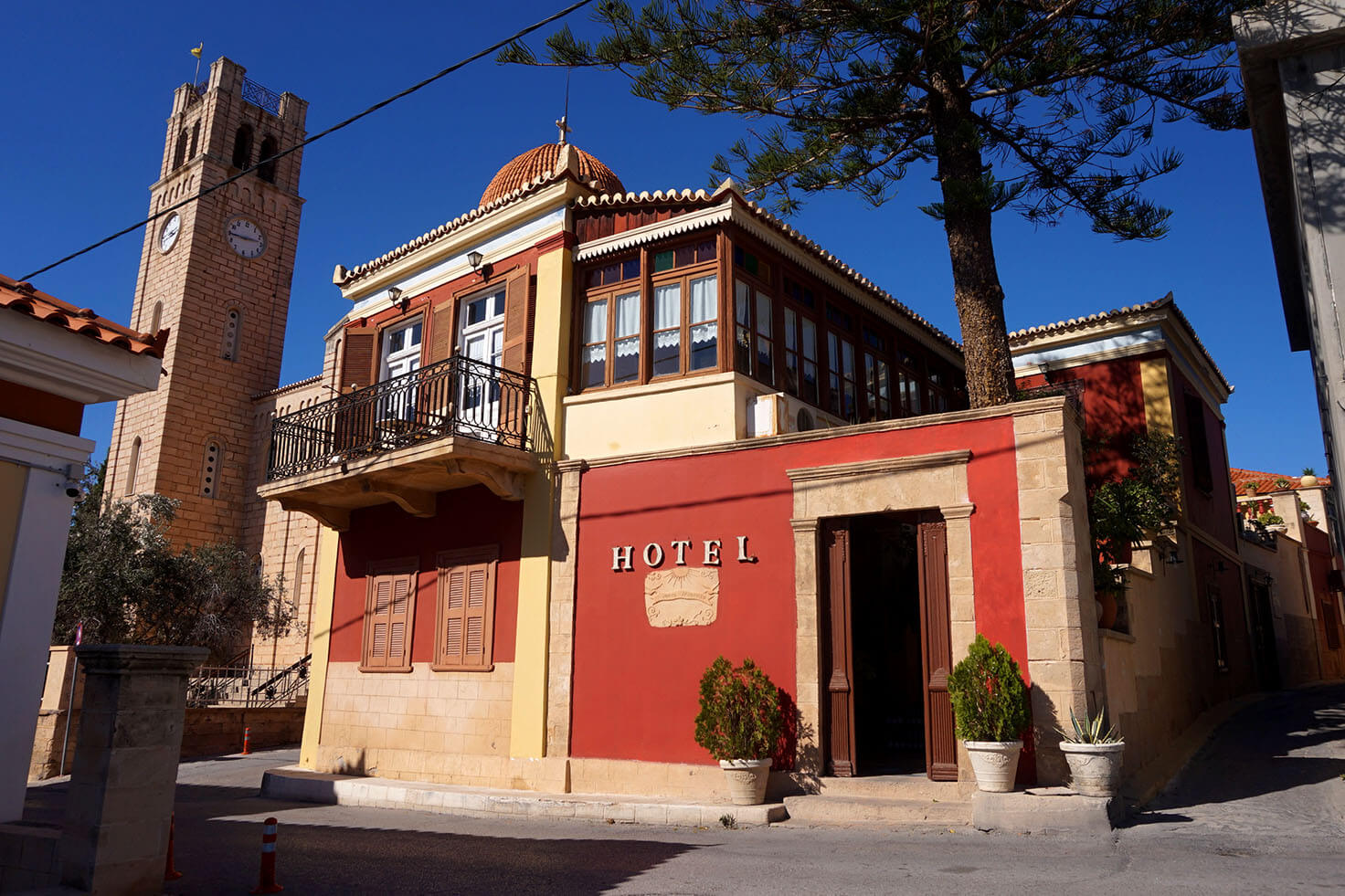
Greece is home to some of the best hotels in the world. Many of them are historic properties. Casa Delfino Hotel and Spa in Chania, Crete, occupies a Venetian mansion dating from the 17th century. Each of its 24 rooms and suites has been decorated in a distinct way. There is also a historic courtyard, a sun terrace, and a luxury spa.
Kyrimai Hotel on the Mani Peninsula is a splendidly reconstructed group of buildings from the 19th century. The original wine cellar has been turned into the reception room, while the wood storage space still houses historic documents. Its 22 rooms have exposed stone walls, arches, and wooden beams.
The Poseidonion Grand Hotel in Spetses is equally grand. Built in 1914 and modeled after the Belle Époque palaces of the French Riviera, it quickly became a favorite among the rich and famous. Fifty-five rooms and suites are spread across the historic and new wings. The so-called Royal Suite has three bedrooms, a living room, and a beautiful balcony overlooking the Mediterranean Sea.